ASTM D4255
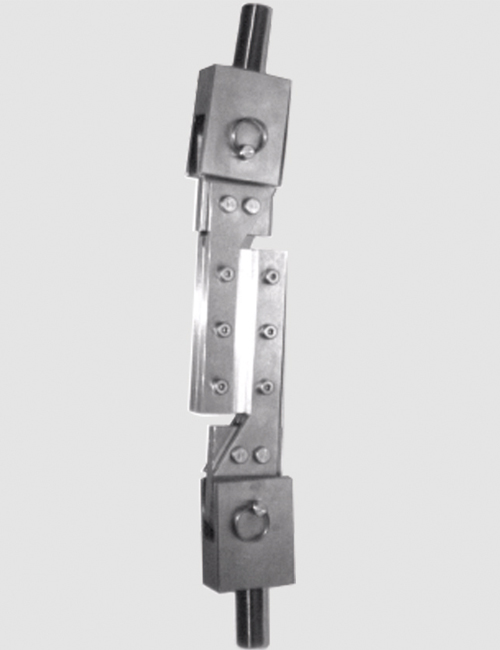
Engineered in strict accordance with ASTM D4255, our in-plane shear properties fixtures are designed to determine the shear strength and modulus of high-modulus fiber-reinforced composite materials. Available in two configurations — Procedure A (two-rail shear for tensile loading) and Procedure B (three-rail shear for compressive loading) — these robust steel fixtures feature tungsten carbide-coated gripping faces to prevent specimen slippage and pin-connected alignment to ensure perfect loading axis concentricity. Capable of handling loads up to 50 kN and operating in extreme temperatures (-70 to 300 °C), they deliver precise and reliable shear data essential for advanced composite material specification and structural design.
Overview
Engineered in strict accordance with the ASTM D4255 standard, this fixture is designed to determine the in-plane shear properties of high-modulus fiber-reinforced composite materials. It offers two testing configurations: Procedure A (two-rail shear) and Procedure B (three-rail shear). In Procedure A, the laminate is securely clamped between two pairs of loading rails, transferring shear forces into the specimen under tensile load. In Procedure B, the laminate is clamped to two outer rails while a central rail is subjected to tensile or compressive loading, creating a more complex shear stress state. Both methods provide accurate in-plane shear property data essential for material specification, R&D, and structural design applications.
Design Features and Benefits
Applications
Technical Specifications:
| Parameter | Procedure A | Procedure B | |
| 1 | Model Number | ACAD4255-MA | ACAD4255-MB |
| 2 | Test Standard | Two-Rail Shear | Three-Rail Shear |
| 3 | Test Style | Tension | Compression |
| 4 | Part No. | 1JAASD425502 | 1JAASD425504 |
| 5 | Max Load Capacity | 50 kN | 50 kN |
| 6 | Specimen Length | 150 mm | 150 mm |
| 7 | Specimen Width | 76 mm | 140 mm |
| 8 | Specimen Thickness | 3.2 mm (0.13 in) | 3.2 mm (0.13 in) |
| 9 | Fixture Dimensions (H × W × D) | 505 × 90 × 65 mm | 275 × 180 × 150 mm |
| 10 | Weight | 8.5 kg | 12.2 kg |
| 11 | Operating Temperature | -70 to 300 °C | -70 to 300 °C |
| 12 | Built Material | Steel | Steel |
| 13 | How to Use / Interface | Φ20, Φ31.75, Φ40 mm | Compression Platens (Φ150 mm) |
Related Products:
| Part No. | Model Code | Description |
| 1JYY1105V301 | YSS105S.00 | Compression Platen Set, 150 mm (6 in) in diameter, adjustable spherical seating on the upper platen |
Why Choose Us?
-
• We provide 7×24 technical consultation, operator training, and timely software updates.
-
• We offer remote monitoring of equipment status, enabling rapid diagnosis and resolution when abnormalities occur.
-
• Keeping up with the latest development of widely adopted international standards from ASTM, ISO, etc. to ensureyour test results relevant and credible
-
• Maximizing your lab investment returns with tailored solutions to your unique needs from cost effective hardware tosoftware customization
-
• We treat everyone, be it clients, colleagues or partners, with honesty and sincerity.
-
• Staying at the forefront of testing technologies that continuously improve test accuracy, repeatability, and eficiency