Lishi Aids Ultrathin Hydrogel Development
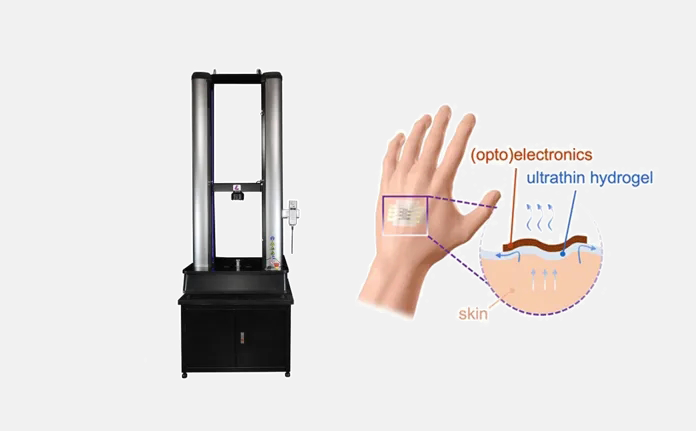
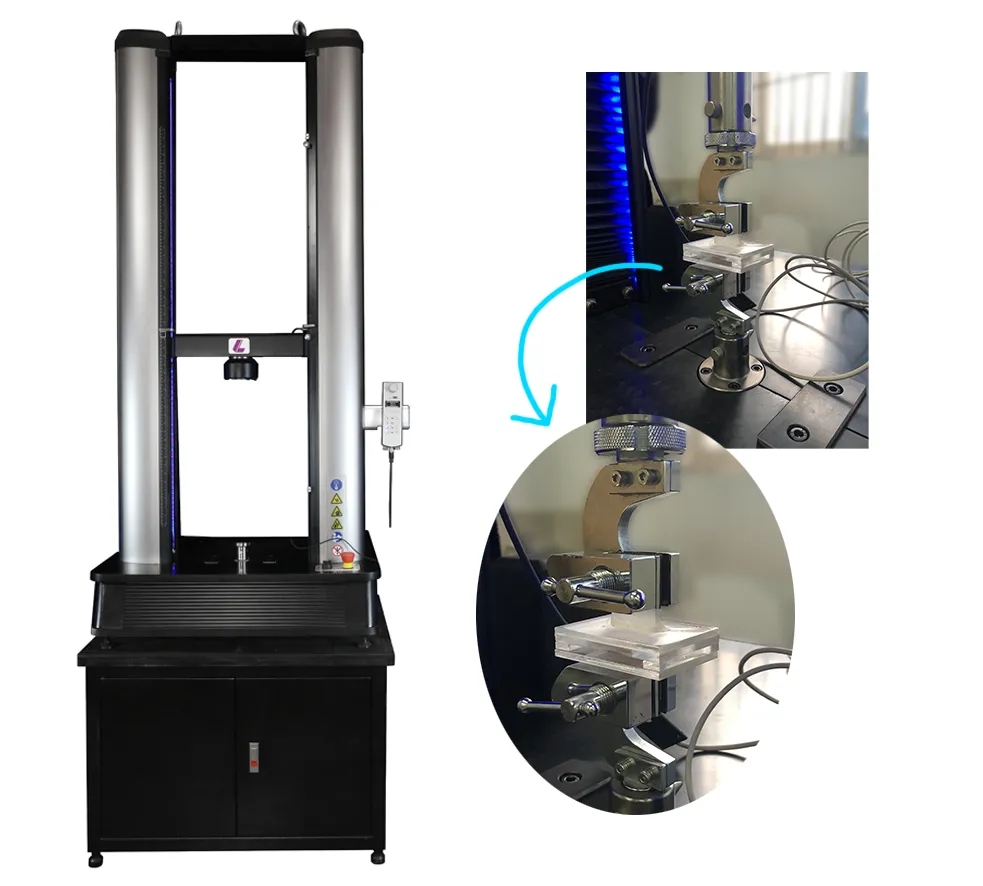
This column focuses on the research of 10-micron peelable ultrathin hydrogel developed by Xu Xiaomin's team from Tsinghua University, which makes "seamless and imperceptible" skin-integrated electronics possible. Lishi KE LE3104 electronic universal testing machine plays a key role in evaluating its mechanical properties, contributing to the development of this field.
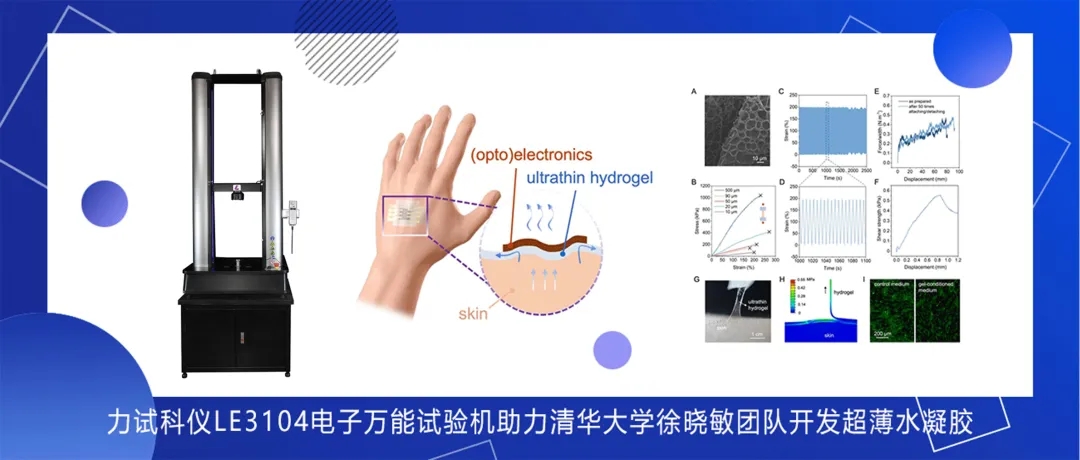
<h1>Skin-integrated electronics offer a revolutionary new paradigm for personalized disease diagnosis and treatment, as well as human-computer interaction. However, the flexible substrates commonly used in current flexible electronics have problems such as high Young's modulus, lack of breathability and adhesiveness, which easily cause skin irritation or mechanical constraints, hindering their long-term application on the skin surface.<h1>
To address this challenge, the research group led by Xu Xiaomin from Tsinghua University Shenzhen International Graduate School successfully developed the first peelable ultrathin hydrogel with a thickness of only 10 microns, and used it as an interface between skin and flexible electronics, confirming the feasibility of "seamless and imperceptible" skin-integrated electronics.
In the evaluation of the mechanical properties of this research, the Lishi KE LE3104 electronic universal testing machine played an important role. The research team used this equipment to carry out uniaxial tensile and unconfined compression tests, and also conducted 500 cyclic stretching tests (stretching speed 30mm/min, maximum strain 200%). To avoid cracks at the sample clamping positions, both ends of the sample were glued to paper sheets before being connected to the fixtures.
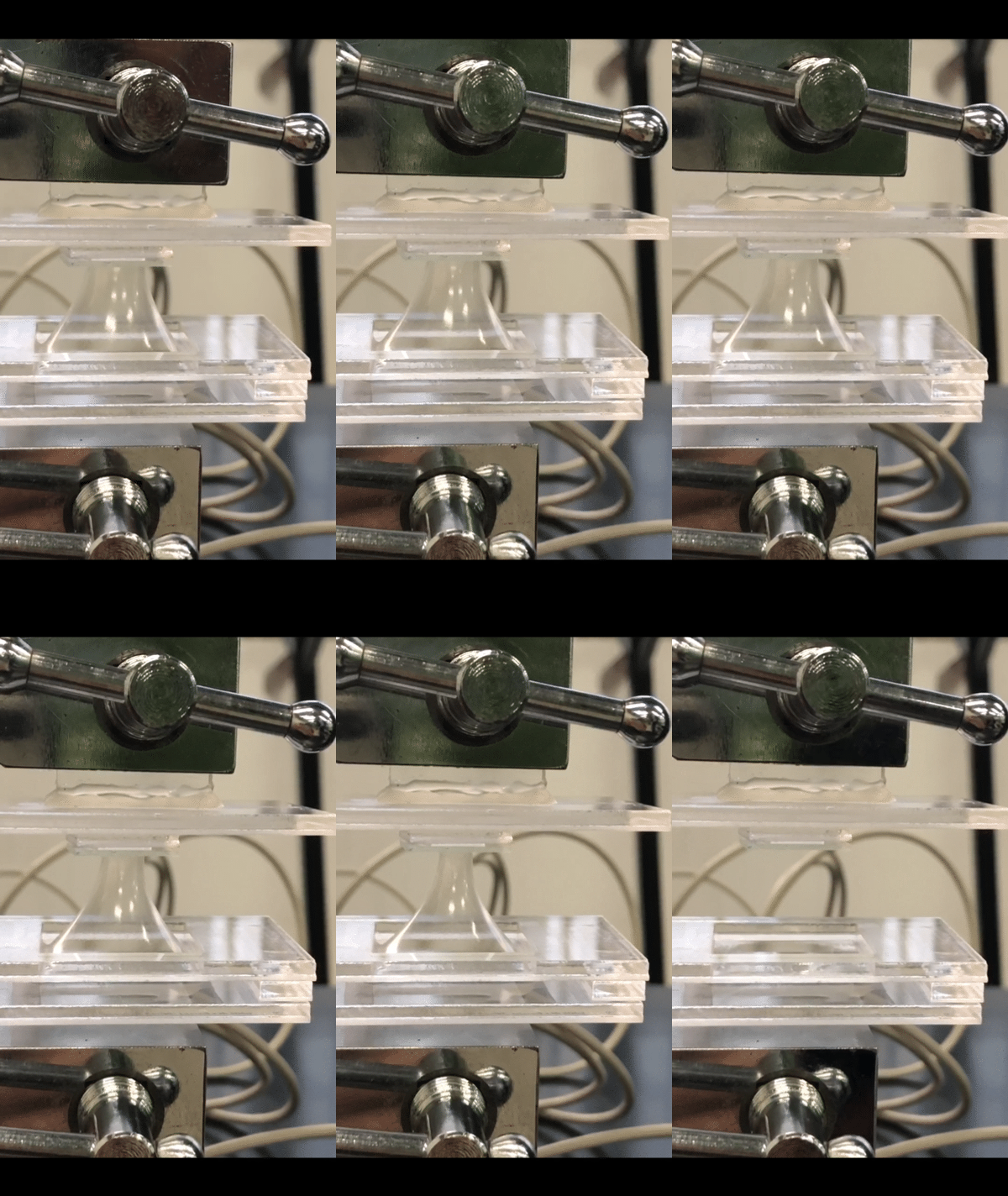
Meanwhile, to quantitatively measure the interfacial adhesion strength between the ultrathin hydrogel film and the skin, the team used the equipment to perform a standard 90° peeling test with a peeling rate of 30mm/min. Fresh porcine skin was used in the test because the localized in-plane mechanical properties of human skin are similar to those of fresh porcine skin samples. A piece of paper was attached to the other surface of the hydrogel film to avoid elongation in the peeling direction.
The relevant research results have been presented in "Ultrathin Hydrogel Films toward Breathable Skin-Integrated Electronics" (paper link: https://doi.org/10.1002/adma.202206793). Lishi instruments provided strong support for the smooth progress of this research, contributing to the development of ultrathin hydrogels in the field of skin-integrated electronics.
